Building deck stairs doesn’t mean settling for generic wood treads that’ll rot in five years. Trex composite stairs offer homeowners a modern alternative that sidesteps weather damage, splintering, and endless maintenance cycles. Whether you’re designing a straight run down to the yard or planning something with visual flair, curved steps, angled approaches, mixed-material railings, composite materials give you both durability and design flexibility. This guide walks through seven practical stair ideas using Trex products, from material selections and color pairings to installation shortcuts and long-term upkeep, so you can build stairs that look sharp and last decades.
Table of Contents
ToggleKey Takeaways
- Trex deck stairs offer superior durability compared to pressure-treated wood, resisting rot, splintering, and UV fading while requiring minimal maintenance beyond occasional rinsing.
- Straight staircase designs are the most affordable and DIY-friendly option, requiring consistent 7-inch riser heights and 10-inch minimum tread depth to meet building codes.
- Curved and angled stair configurations add architectural interest but demand multiple stringers spaced 16 inches on center and careful layout planning for safety.
- Trex composite stairs come in 15+ colorways—gray-on-gray for modern aesthetics or warm browns for traditional homes—and should be tested in natural light before final purchase.
- Proper railing installation with composite or metal balusters and step lighting enhances both safety and design, while annual fastener inspections and seasonal rinsing keep stairs performing for 15–20+ years.
- DIY installation savings come from handling stringer layout and cutting yourself, using stainless steel screws, and negotiating bulk discounts on composite boards from suppliers.
Why Choose Trex Composite Stairs for Your Deck
Trex composite decking is engineered from wood fibers and plastic, designed to resist rot, splintering, and UV fading far better than pressure-treated lumber. Unlike solid wood, which swells and shrinks with seasonal moisture, composite materials remain dimensionally stable, meaning your stair treads won’t cup or twist after their first rainy season.
Another practical advantage: composite stairs require no staining or sealing. A quick wash with a garden hose every six months keeps them looking fresh. You’ll save weekends that would otherwise disappear under a paintbrush.
Composite stairs do cost more upfront than treated lumber (typically $80–$150 per linear foot for treads and risers, versus $20–$40 for pressure-treated pine), but that initial investment pays off through reduced repairs and refinishing. Many DIYers recoup costs in savings within ten years.
Straight Staircase Designs for Clean, Modern Appeal
The straight run remains the most affordable and easiest design to build. Calculate your total rise (deck surface to ground) and divide by 7 inches per step, that’s the typical riser height that feels natural underfoot and meets building codes in most jurisdictions. If your rise is 28 inches, you need four steps: 35 inches means five.
For tread depth, Trex composite boards come in standard widths (typically 5.5 or 11 inches actual width after mill tolerances). A minimum 10-inch tread is code-compliant and feels secure. Use a stringer, the angled support frame, cut from 2×12 pressure-treated lumber or composite, screwed at both top and bottom to the deck band board and a concrete footer, respectively.
Straight stairs suit contemporary decks and work well in tight spaces. They’re also forgiving for DIYers: one centerline stringer handles modest widths, and step-by-step fastening follows a predictable rhythm. Sand any cut edges on composite boards lightly with 120-grit sandpaper to remove mill burrs: they won’t splinter, but a smooth edge looks more finished. Resources like Ana White’s deck plans include free stair templates you can adapt to your dimensions.
Curved and Angled Stair Options for Visual Interest
Curved or angled stairs demand more planning but deliver architectural presence. Curved stairs follow an arc as they descend, wrapping around a focal point or leading naturally into a landscaped garden area. They require multiple stringers (not just one centerline support) and careful layout using a bending jig or template.
Angled stairs, those that approach the deck at 45 degrees instead of straight-on, work well when you want to stagger the staircase away from the main deck footprint, freeing up space for a seating area or hot tub. Angle cuts on stringers are straightforward if you’re comfortable with a miter saw, but make sure the rise and run remain consistent across all steps: a stair that varies even a half-inch per tread creates a tripping hazard.
Both approaches require stringers spaced closer together, usually 16 inches on center for safety under load, and longer spans benefit from steel support brackets bolted to the stringer and house rim. Angled designs also pair nicely with mixed railing styles, where composite balusters fade to metal or cable runs as they turn. Fix This Build That offers detailed woodworking tutorials on laying out angled transitions in stairwork.
Color and Material Combinations That Work Best
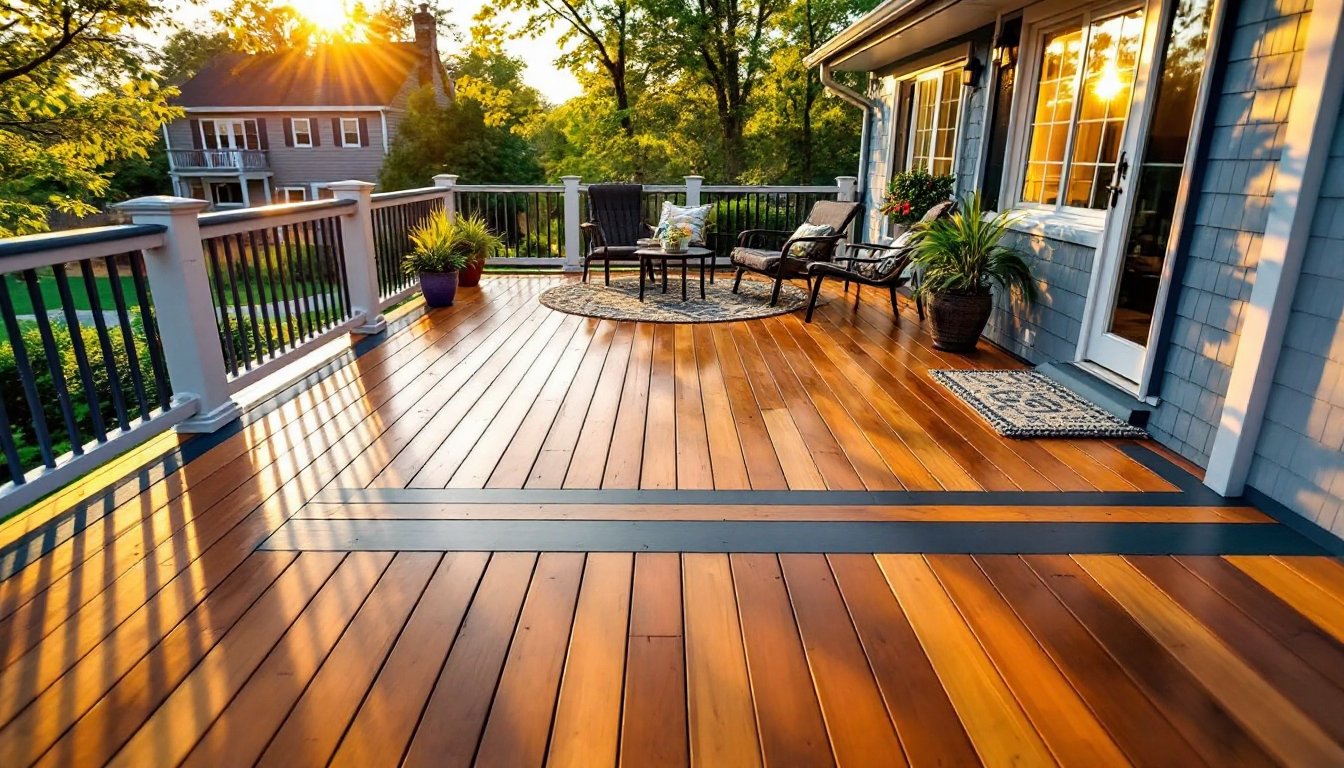
Trex composites come in over 15 colorways, grays, browns, and mixed tones. Your stair color sets the visual tone for the entire deck transition.
Gray-on-gray is a safe, modern choice: darker gray Trex treads with lighter gray or charcoal risers create subtle contrast without clashing. It matches contemporary homes and hides dirt between cleanings.
Warm brown blends, cappuccino or cedar tones, suit traditional or cottage-style homes. Pair warm Trex treads with matching painted risers (a durable exterior acrylic-latex works fine and costs $30–$50 per gallon) for a cohesive look.
Mixed materials add personality. Composite treads (say, Trex Transcend in Island Mist) with black aluminum or metal railings create a contemporary contrast. Alternatively, combine composite treads with pressure-treated risers stained to coordinate, compositie ages gradually to a weathered tone, and wood stain can be refreshed, balancing cost and longevity.
Always order sample pieces and test them on your deck in morning and afternoon light before committing to a large purchase. Color perception shifts with shadows and neighboring siding colors.
Adding Railing and Lighting to Enhance Safety and Style
Decks over 30 inches high require guardrails meeting IRC (International Residential Code) standards: rails must be 36–42 inches tall, spaced to prevent a 4-inch ball from passing between balusters, and able to withstand 200 pounds of horizontal force.
Composite balusters match Trex treads visually and require zero maintenance, but they’re pricier ($8–$12 each). Metal or vinyl balusters offer cost savings ($3–$6 each) and pair beautifully with composite treads. Cable railing, stainless steel wires threaded between posts, delivers a modern, open feel and is increasingly code-compliant in many areas (confirm with your local building department).
Lighting transforms stairs from a safety detail into a design feature. Recessed step lights ($15–$40 each) screwed into the underside of treads or the face of risers provide safe footing after dark and cost roughly $100–$200 for a full staircase run. Solar options eliminate wiring but tend to dim quickly in northern climates. LED strips mounted under the handrail are trendy and functional.
Install railing posts at the top and bottom of the staircase, and follow the stringer angle with intermediate posts every 4–6 feet. Always secure railings to your deck frame with bolts, screws alone won’t meet code.
Budget-Friendly Installation Tips for DIY Enthusiasts
If labor costs are your concern, handling stringer layout and cutting yourself is where you’ll see savings. A miter saw ($120–$300) and a good layout square ($20–$40) are your primary investments beyond fasteners.
Pre-assemble stringer components on sawhorses before installing them, it’s faster and safer than working overhead. Use 2.5-inch stainless steel deck screws (about $25 per 5-pound box) to fasten treads and risers: stainless won’t rust or bleed into composite. Avoid nails, they work loose over time on stairs under foot traffic.
Buy composite boards in bulk if you can negotiate with your supplier (home centers often offer 5–10% discounts on orders over $1,000). Check for mill-second or overstock deals: minor cosmetic marks won’t show once installed.
Rent a concrete auger ($40/day) if you’re setting a footer post below the frost line, digging by hand invites injury and takes hours. Always set stair posts below local frost depth (typically 24–48 inches in northern zones) so winter heave doesn’t shift your stairs out of plumb. The Handyman’s Daughter has worth reviewing before you dig.
Maintenance and Long-Term Care for Your Trex Stairs
Composite stairs need far less upkeep than wood, but routine care extends their lifespan and keeps them looking sharp. Twice yearly, spring and fall, rinse treads and risers with a garden hose and soft brush to clear algae, mildew, and debris. Stubborn stains respond to a 50/50 mix of white vinegar and water and a stiff brush: pressure washers (above 3000 PSI) can damage composite surfaces, so avoid them.
Inspect fasteners annually, especially screws at the top of the stringer where frost heave stresses connections. Tighten any loose screws with a drill-driver. Check for gaps forming between risers and treads, they’re normal as seasonal expansion and contraction occur, but gaps over 3/8 inch should be shimmed with composite shims to prevent debris accumulation.
Composite doesn’t rot, but it can accumulate standing water in poorly pitched areas. Ensure stairs drain, a slight slope away from the deck aids water runoff. Over 15–20 years, color fades gradually to a weathered gray (a desirable patina for many homeowners), but UV-protective coatings like those in Trex Enhance or Trex Signature Collection slow fading significantly.
Winter salt and sand can slightly etch composite surfaces, but they don’t damage structural integrity. Rinse thoroughly after winter thaw, and your stairs will perform faithfully for decades.