A stacked stone fireplace has become the centerpiece project for homeowners who want to add warmth, character, and real visual impact to their living spaces. Whether you’re drawn to sleek modern designs or rustic charm, stacked stone offers versatility that works with nearly any décor style. The appeal goes beyond aesthetics, stone is durable, low-maintenance, and creates a focal point that naturally draws people into a room. If you’ve been thinking about tackling a stacked stone fireplace project or refreshing an existing one, this guide walks through 25 modern and timeless design ideas to spark your next renovation.
Table of Contents
ToggleKey Takeaways
- Stacked stone fireplace designs range from modern minimalist black and gray palettes to rustic weathered finishes, offering versatility to match any décor style and create a natural focal point in your home.
- Material selection significantly impacts cost—manufactured veneer costs $8–15 per square foot while natural stone runs $12–25 or higher, making hybrid installation approaches (DIY for flat sections, professional for complex areas) a budget-smart option.
- Proportional design matters: the fireplace opening should occupy roughly 20–30% of the total wall height, and combining stacked stone with wood mantels and metal accents creates intentional, balanced designs that feel sophisticated.
- Proper surface preparation with level backing, chalk lines, and correct mortar selection (Type N for standard work, thin-set adhesive specifically for veneer) prevents costly mistakes and ensures long-term durability.
- Accent wall combinations that extend stacked stone beyond just the fireplace surround create dramatic visual impact, though mixing materials (stone with shiplap or drywall above) makes projects more manageable and cost-effective than full-wall coverage.
Modern Minimalist Stacked Stone Designs
Contemporary Black and Gray Stone Palettes
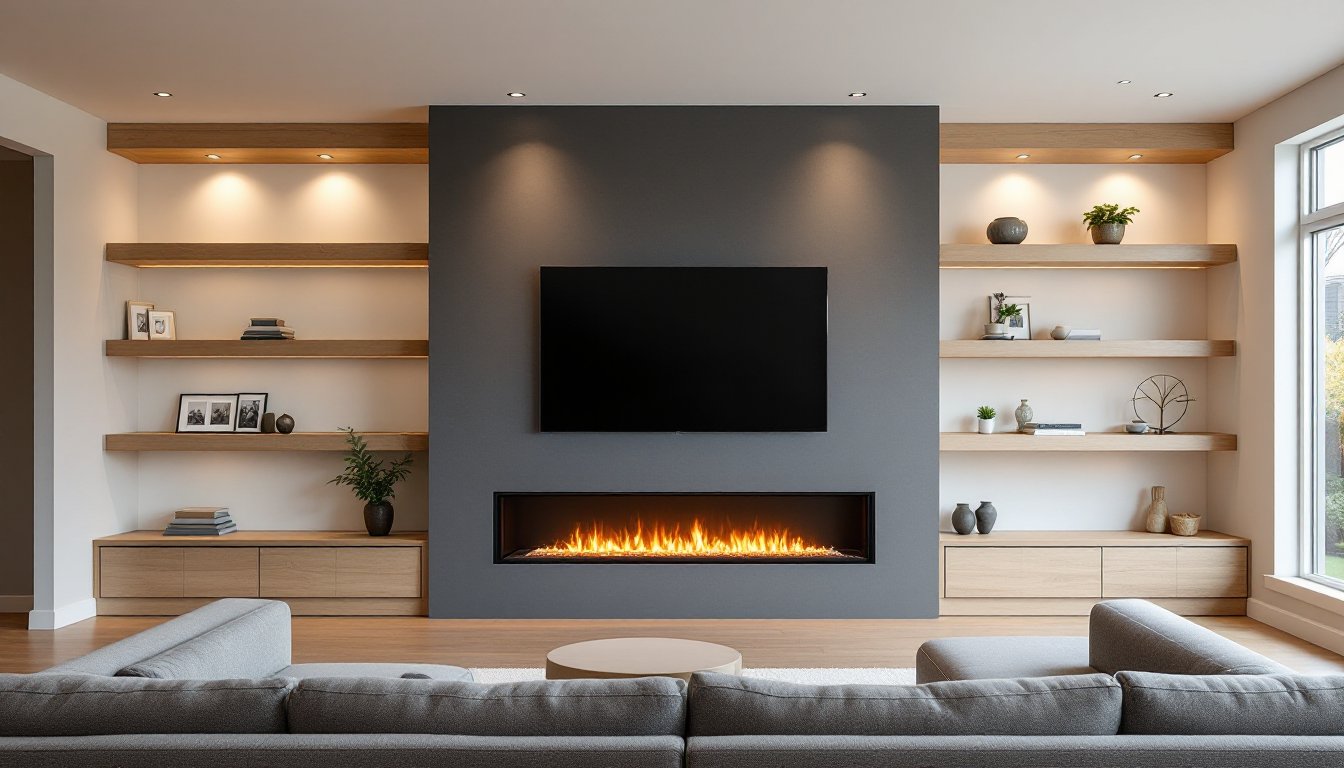
Minimalist stacked stone fireplaces pair clean lines with neutral, monochromatic stone selections. Black basalt, charcoal slate, and light gray fieldstone create sophisticated looks without visual clutter. These designs work especially well in open-concept homes where the fireplace needs to complement surrounding spaces rather than dominate them.
When selecting materials, choose stones with consistent thickness (roughly 1.5 to 2.5 inches) for a more uniform, contemporary appearance. Irregular shapes work, but arrange them in intentional patterns, running bond or stacked horizontal courses read as intentional design rather than accidental arrangement. Dry stacking (mortarless installation) works beautifully here: the gaps between stones feel architectural rather than rough.
Flush-mounted floating shelves above or beside the fireplace enhance the minimalist aesthetic without breaking the visual flow. Pair matte black or stainless steel fireplace trim with gray stone for a cohesive, gallery-like effect. Keep the hearth clean, concrete, polished concrete, or a single broad slab of slate eliminates fussy transitions.
Rustic and Farmhouse Stone Fireplace Styles
Weathered and Textured Stone Finishes
Rustic stacked stone celebrates natural variation. Rough-hewn granite, river rock, reclaimed fieldstone, or intentionally aged limestone creates a lived-in, grounded feel. Stones should vary in size, color, and texture, this isn’t about uniformity but about honest, honest materiality.
Weathered finishes benefit from wider mortar joints (0.5 to 1 inch) that echo traditional stone masonry. A light gray or cream mortar tends to fade into the background: darker mortar intentionally highlights the stone pattern. Rough-faced stone (with chiseled or natural uneven surfaces) catches light differently than smooth stone, adding depth and shadow that makes the fireplace feel substantial.
Reclaimed or antique stone sourced from salvage yards carries real history and character, though it typically costs 30–50% more than new stone. If budget is a concern, new stone intentionally textured to look aged works well too. Pair rustic stone with a wood mantel (reclaimed barn wood is popular) and wrought iron accents for authentic farmhouse style. A brick or stone hearth that extends 18 to 24 inches from the firebox maintains period proportions and provides practical heat protection.
Accent Wall and Feature Fireplace Combinations
Stacking stone across an entire wall, not just the fireplace surround, creates dramatic visual impact in a way a fireplace alone cannot. When done right, the fireplace becomes the anchor of a larger stone feature. This approach works in larger rooms (or rooms with high ceilings) where the visual weight of full-wall stone doesn’t overwhelm the space.
Common approaches include stacking stone from the floor to the ceiling, or running it to a soffit line and transitioning to drywall or paneling above. Mixed-material combinations perform well here: stack stone around the fireplace opening and lower portion of the wall, then transition to shiplap, board-and-batten, or painted drywall for the upper section. This breaks up visual monotony and makes the project more manageable (and less expensive) than covering an entire wall.
Consider the fireplace opening size too. A modest stone fireplace surrounded by full-wall stone can look unbalanced: ensure the opening is proportionate. A good rule is the opening should occupy roughly 20–30% of the total wall height. Stacked stone fireplace designs are showcased in various gallery collections to provide real-world proportioning inspiration.
Mixing Stone with Wood and Metal Elements
Hybrid designs that combine stone with wood mantels, wooden beams, metal trim, and steel fireplace surrounds feel balanced and intentional. Stone provides texture and warmth: wood adds organic coziness: metal introduces an industrial or contemporary edge.
A reclaimed wood mantel 6 to 8 inches thick and 10–12 inches deep mounted above the stone creates a visual anchor and functional shelf for décor. Stainless steel or powder-coated metal fireplace trim around the opening prevents that “mass of undifferentiated stone” look and signals the actual functional boundary. Exposed wooden beams or joists above the fireplace (real or faux) reinforce rustic-meets-modern aesthetics.
Hardware and accents matter: wrought iron fireplace doors, copper accent lights, or brushed nickel decorative elements all dialogue with stone in different ways. Leather seating, metal side tables, and sculptural wood pieces round out the mixed-material story. The key is restraint, mixing three materials (stone, wood, metal) is sophisticated: adding more starts to feel chaotic. Step-by-step guidance on construction techniques ensures your mixed-material design stays structurally sound.
Budget-Friendly Stacked Stone Installation Tips
Stacked stone is an investment, but smart material and labor choices can keep costs realistic. Start by understanding your material options.
Material Selection: Manufactured stacked stone veneer costs $8–15 per square foot installed, while natural stone runs $12–25 or higher. Manufactured stone is lighter, cuts easier, and is designed for DIY installation. Natural stone is more durable long-term but demands professional-level skill if you’re not experienced. Reclaimed stone costs more upfront but eliminates the “new” appearance some DIYers dislike.
Installation Approach: A 4-foot by 6-foot fireplace surround (roughly 24 square feet) using manufactured stone might cost $200–400 in materials if you install it yourself, versus $600–1,500 if a professional handles it. Hiring a professional mason for tricky stone-work (around the firebox opening, inside corners, outside corners) while you handle flat sections is a cost-effective hybrid.
Preparation Saves Money: Ensure the backing surface (concrete backer board, metal mesh, or existing masonry) is clean, level, and adequately prepared before stone arrives. Guessing measurements or starting mid-project wastes materials and time. Use a chalk line to establish plumb and level lines, this prevents layout mistakes that eat into your budget.
Mortar and Adhesive: Type N mortar (standard for exterior work) costs less and is forgiving: Type S is stronger but unnecessary for stacked stone over concrete. Pre-mixed mortar runs $5–10 per 50-pound bag: buying dry and mixing it yourself saves money if you have the right tools. Thin-set mortar or construction adhesive specifically rated for stone veneer is mandatory: do not substitute general-purpose construction adhesive.
Begin with a small, visible test section to check fit, mortar color, and your technique before committing to the full project. Beautiful stone fireplace examples, helping you set realistic expectations for your budget and scale.