The TV fireplace wall has become the centerpiece of modern living rooms, combining two essential elements into one focal point. Whether you’re renovating an existing fireplace or building one from scratch, coordinating the television and fireplace placement requires thoughtful planning to avoid an awkward, cluttered look. This guide walks you through seven proven TV fireplace wall ideas, from sleek modern linear designs to timeless stone surrounds, giving you the visual direction and practical steps to transform your space. Each approach balances aesthetics with function, ensuring your entertainment center works as well as it looks.
Table of Contents
ToggleKey Takeaways
- TV fireplace wall ideas combine heat sources and entertainment into one focal point, requiring 18 to 24 inches of clearance between the fireplace and mounted television to prevent heat damage and maintain comfortable viewing.
- Modern linear fireplaces with floating TV mounts create a clean, contemporary aesthetic that works in both compact apartments and large homes, with neutral paint colors directing visual focus to the fireplace glow.
- Built-in shelving around your entertainment center transforms the fireplace wall into functional display space by alternating tall and short objects and leaving 20-30% of shelf space empty to avoid visual clutter.
- Stone and brick surrounds deliver timeless appeal and require proper installation techniques—stacked stone needs framing verification at 15 pounds per square foot, while brick requires annual mortar maintenance to prevent freeze-thaw damage.
- Corner fireplace layouts optimize space in smaller homes by distributing focal points across rooms, but consult local building codes for required clearances and ventilation paths before committing to your design.
- Smart integration with cable management, thermal barriers for electronics, and voice-controlled smart home systems ensures your TV fireplace wall functions seamlessly while maintaining a clean, design-focused appearance.
Modern Linear Fireplace with Floating TV Mount
A linear fireplace paired with a floating TV mount creates a clean, contemporary aesthetic that works in both compact apartments and large open-concept homes. The fireplace runs horizontally, typically 36 to 60 inches wide, and sits below the mounted television, establishing a visual hierarchy that feels balanced and intentional.
Start with the fireplace installation. Linear models come in vented and ventless versions: ventless units offer more placement flexibility but produce less heat. If you’re running gas lines, budget for professional installation and code compliance, this isn’t a DIY shortcut. Mount the fireplace surround at a height that allows 18 to 24 inches of clearance above it for the TV. This spacing prevents heat damage to your television and maintains proper sight lines from your seating area.
Next, install the TV mount directly above the fireplace. A full-motion or tilting bracket lets viewers adjust the angle from the couch, reducing glare and neck strain. Thread cables through the wall cavity using a stud finder to locate safe pathways: avoid running power lines near plumbing or HVAC ducts. Paint or finish the wall in a neutral tone, matte black, charcoal, or soft white, to keep visual focus on the fireplace glow and screen without competing colors.
Built-In Shelving and Accent Walls Around Your Entertainment Center
Built-in shelving transforms a fireplace wall into functional display space while anchoring the television within a curated frame. This approach works especially well for homeowners who want to store media, display books, or showcase décor without the floating-shelf minimalism.
Begin by determining your layout. Center the fireplace and TV, then add matching shelving units on each side. Standard shelf depth is 10 to 12 inches: go deeper only if you’re displaying larger items. Install a 1×12 or 1×14 board across the width for the main shelving, supported by 1×4 or 1×6 studs behind drywall. Use a stud finder and secure everything with construction adhesive and screws rated for the load you’re placing on them. Typical shelf spacing is 14 to 16 inches between shelves, enough for books, plants, and decorative pieces without appearing cramped.
Creating Visual Balance with Shelving
Avoid the gallery-wall chaos by following a simple rule: alternate tall and short objects, group items in odd numbers, and leave 20-30% of shelf space empty. The fireplace opening itself becomes the dominant visual element, so shelving should complement, not compete. Paint shelves and backing in an accent color, a deep navy, forest green, or warm gray, to define the zone and make objects pop. Your TV, mounted at eye level between the fireplace and top shelf, naturally pulls focus without dominating the composition.
Facing different design directions? Modern industrial aesthetics suit black metal brackets and natural wood shelves: contemporary spaces favor clean lines with recessed lighting integrated above each shelf. A professional interior design resource like Decoist offers visual inspiration to guide your material and color choices.
Stone and Brick Fireplace Surrounds for Timeless Appeal
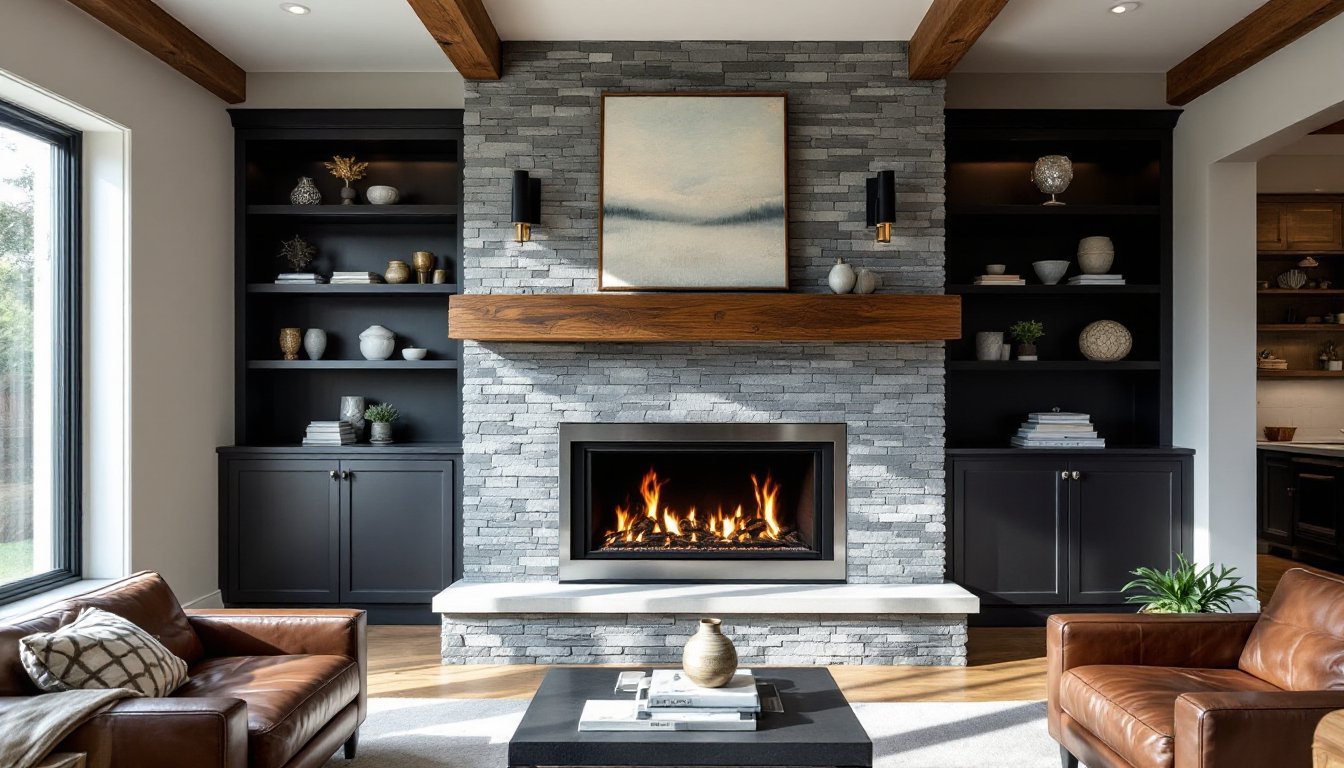
Stone and brick surrounds deliver warmth and permanence that transcends design trends. Whether you’re working with authentic vintage brick, stacked stone veneer, or faux stone, the material anchors the room and justifies a cleaner TV installation above.
If starting from drywall, apply stone veneer over a moisture barrier and cement backer board using thin-set mortar rated for your climate. Real stone is heavier: verify that your framing can handle the load, rough calculations suggest 15 pounds per square foot for stacked stone, double that for solid masonry. Fasten the veneer every 16 inches with mortar and stainless steel anchors to prevent sagging over time.
Brick, whether original or laid fresh, needs mortar maintenance. Inspect joints annually for cracking or spalling: repoint deteriorated mortar using a grout bag or margin trowel to pack fresh mortar into gaps. Breathable mortar, typically a 1:3 lime-to-sand mix for historic brick, prevents trapped moisture that causes freeze-thaw damage in colder climates.
Mounting a TV above stone requires careful planning. Masonry anchors designed for brick or stone won’t rely on wood studs, so use concrete screws or toggle bolts rated for your TV’s weight. Pre-drill with a masonry bit to avoid cracking the material. Mount a full-motion arm to hide cables behind the stone and reduce the mechanical look. The organic texture of stone naturally softens the hard geometry of modern flat screens, creating visual harmony that design-focused homes often showcase as timeless appeal.
Minimalist Fireplace Design with Sleek TV Placement
Minimalist design strips away ornamentation, trusting negative space and material quality to carry visual weight. A horizontal linear fireplace with a seamless surround and wall-mounted TV exemplifies this approach, no mantels, no visible trim, just clean geometry and restraint.
Start with a smooth, primed drywall surface or polished plaster finish. The goal is flatness: any bumps or imperfections catch light and break the minimalist spell. Paint everything in one neutral color, whites, grays, and warm taupes work best, creating a unified backdrop. A matte finish (not glossy) absorbs light, emphasizing form over reflection.
For the fireplace itself, choose a model with minimal visible framing: a frameless glass surround or flush-mount design that sits nearly flush with the wall. Mount the TV on an ultra-thin full-motion arm that tucks completely behind the wall when powered down, or choose a recessed TV niche within the wall cavity itself. This requires framing a stud-reinforced pocket before drywall is hung, plan ahead during renovation. All cables hide inside the wall: exterior conduit or raceways would break the minimal aesthetic.
Lighting matters enormously in minimalist spaces. Subtle recessed downlights or indirect LED strips behind a floating ledge define zones without visible fixtures. The fireplace glow becomes the primary accent light, especially effective in evening hours. This restraint-focused approach requires discipline, resist the urge to clutter shelves or add décor, but the result is a timeless focal point that elevates the entire room.
Corner Fireplace Layouts to Optimize Your Space
Not every living room has a wall dedicated to a fireplace. Corner fireplace layouts maximize footprint efficiency, especially in smaller homes or apartments, while still commanding attention when designed thoughtfully.
Start by assessing corner conditions. A true corner fireplace sits in the corner opening itself, with the TV mounted on an adjacent wall or on an angled mount that swivels. This forces viewers to turn slightly to watch, but distributes the visual focal point across the room rather than fixing it to a single wall, beneficial in open-concept layouts where multiple zones converge.
If the corner is tight, consider a corner-facing arrangement: position the fireplace opening into the corner (angled 45 degrees) and mount the TV on a corner-specific full-motion arm that positions the screen directly in front of seating. This is unconventional but creates an intimate viewing zone while freeing up surrounding walls for storage, windows, or décor.
Building codes for corner fireplaces vary by jurisdiction. Gas fireplaces need minimum clearances from adjacent walls (typically 1 to 3 feet). Consult local code requirements before committing to a layout. Also check ventilation: a vented corner fireplace needs a flue path that may conflict with framing or second-floor walls above. Ventless units offer more flexibility but should never be the only heat source in a room.
Shelf placement in corners requires caution. Floating shelves above and beside the fireplace can feel cluttered quickly. Instead, run open shelving along one perpendicular wall, leaving the corner itself visually open. This breathing room prevents a boxed-in, cramped feeling, essential in smaller spaces where corner fireplaces already consume visual real estate.
Smart Integration: Technology and Design Working Together
Modern TV fireplace walls demand thoughtful cable management and device coordination. Running a TV above a heat source requires strategic planning to prevent equipment failure and create a seamless appearance.
Start with cable routing. Run in-wall conduit or low-voltage wiring behind drywall before drywall is installed: retrofitting is messy and limits options. Use separate conduits for power and low-voltage lines (audio, video, data) to prevent electromagnetic interference. If retrofitting, surface-mounted wiring in a paint-matched raceway beats visible tangled cables. Label everything before closing walls, a critical step most DIYers skip and later regret.
Heat management around electronics is crucial. Electric fireplaces emit minimal heat directly upward, so mounting a TV is safe. Gas fireplaces vary: linear models direct heat outward more than upward, but heat still rises. Install a thermal barrier or heat shield behind the TV mount if clearance is marginal. Monitor TV operating temperatures in the first few weeks of use: most modern TVs auto-shut down if internal temps exceed safe levels, but you don’t want your system running at that threshold constantly.
Smart home integration ties everything together. A central hub, Amazon Alexa, Google Home, or Apple HomeKit, can trigger fireplace ignition, adjust TV brightness for reduced glare when the fireplace activates, and manage ambient lighting. Voice control (“Alexa, set TV fireplace scene”) beats fumbling with remotes. This technology layer requires preplanning during construction: running power and data lines before walls close eliminates the need for messy surface-mounted infrastructure afterward. Design-focused resources often highlight smart fireplace technology as a growing trend in modern homes, proving that function and aesthetic appeal aren’t mutually exclusive.