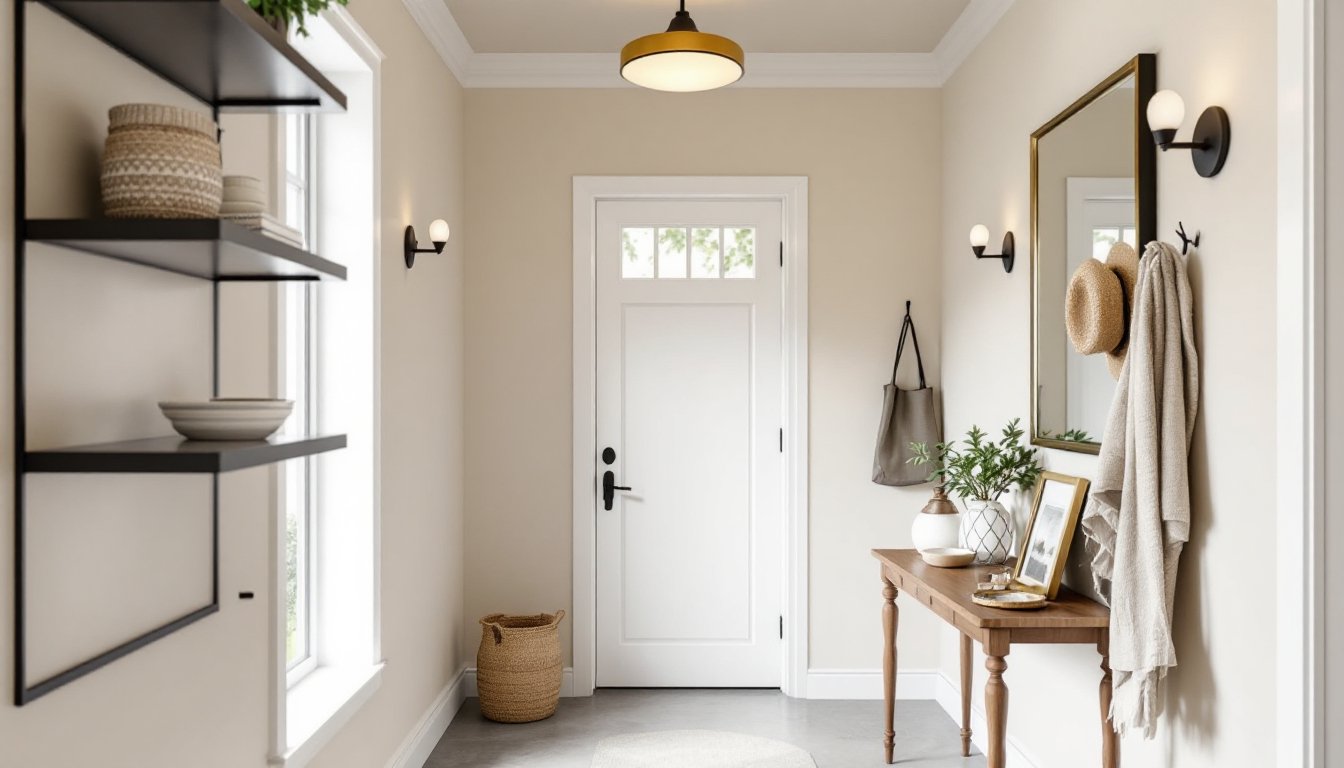
A tiny entryway doesn’t have to feel like a cramped afterthought. Whether your front door opens into a narrow hallway, a corner of your living room, or a modest vestibule, smart design choices can transform the space into a functional, inviting gateway to your home. The key is working with what you have, not against it. By using vertical storage, strategic lighting, and intentional décor, homeowners can create an entryway that feels spacious, welcoming, and distinctly theirs. The following seven ideas are proven tactics that tackle common challenges: nowhere to hang coats, no landing spots for keys and mail, and limited visual interest. Ready to make your entry count?
Table of Contents
ToggleKey Takeaways
- Vertical storage solutions like wall-mounted hooks, pegboards, and floating shelves maximize tiny entryway space without consuming valuable floor area.
- A bold paint color or wallpaper transforms a small entryway into a stylish focal point and sets an immediate tone for your home’s aesthetic.
- Strategic lighting layered with overhead, task, and ambient sources makes a cramped entryway feel bright and welcoming rather than shadowy and confined.
- A narrow console table or compact bench provides essential landing spots for keys and everyday items while anchoring the space visually.
- Mirrors reflect light and create perceived depth in tiny entryway ideas, making the space feel larger without requiring any additional square footage.
- Start with one or two affordable improvements—such as paint and a console table—and build your tiny entryway design incrementally to avoid overwhelming the space.
Embrace Vertical Storage Solutions
When floor space is scarce, walls become your best friend. Vertical storage pulls visual weight upward and keeps the entry uncluttered, essential in a tiny space where every square foot matters.
Wall-mounted hooks, pegboards, and floating shelves are practical starting points. A simple row of five to seven hooks mounted at standard height (around 60 inches from the floor) handles coats, bags, and hats without consuming precious real estate. Pegboards offer flexibility: you can rearrange pins, shelves, and baskets as needs change. Floating shelves work well for display items, baskets, and functional décor that doesn’t accumulate clutter.
For serious storage, consider a tall, narrow cabinet or locker-style unit. These occupy minimal floor footprint while providing enclosed storage for shoes, scarves, and seasonal gear. Many hardware retailers stock slender cabinets designed specifically for small spaces. Ensure any mounted storage is anchored securely into studs (or use heavy-duty wall anchors rated for the weight you’re storing), and measure twice before drilling.
Baskets nested on shelves or inside cabinets conceal disarray. Label them, “Gloves,” “Keys,” “Umbrellas”, so everyone in the household knows where things belong. This simple system prevents the entry from devolving into a dumping ground for everyday items.
Choose a Bold Paint Color or Wallpaper
A tiny entryway is the perfect laboratory for color courage. Because the space is small and usually enclosed, a bold hue or pattern feels intentional and dramatic rather than overwhelming. Think deep jewel tones, earthy terracotta, soft sage, or even a moody charcoal, colors that wouldn’t work across an entire home but shine in a condensed space.
Start with a quality primer and two coats of paint (eggshell or satin finish for durability and easy cleaning in a high-traffic zone). Most gallons of paint cover approximately 350 square feet, so a tiny entryway likely needs just one quart. If you’re committing to wallpaper, measure your wall dimensions and order paper accordingly: wallpaper comes in single and double rolls, and installation is straightforward on small, simple wall planes. Avoid patterns on multiple walls in a tiny space, one accent wall is enough.
Color psychology matters: cooler tones (blues, greens) can feel more spacious, while warm tones (reds, oranges) create intimacy. Test your chosen color with large swatches on the actual wall under your home’s lighting (natural and artificial) for a few days before committing. A bold entry sets the tone for your whole home and gives visitors an immediate sense of your style. This is one of the most affordable tiny entryway ideas because paint is inexpensive and the ROI, in visual impact, is immense.
Install a Narrow Console Table
A slim console table is the workhorse of tiny entryways. It provides a landing spot for keys, mail, and everyday carry items, plus it anchors the space visually and offers an opportunity to display décor or a table lamp.
Look for tables with a depth of 10 to 14 inches (rather than the standard 16–18 inches) and heights of 28–36 inches, depending on your space and preference. Some console tables include shelves or drawers underneath, which extends storage without adding bulk. Materials range from wood and metal to glass and salvaged pieces: choose something that complements your home’s style. Thrifted or upcycled console tables are budget-friendly alternatives if you’re up for a simple refinishing project, a fresh coat of paint or stain and new hardware can transform a dated piece.
Position the table against a blank wall or directly opposite the entry door. If you’re working with an extremely tight footprint, consider a half-round or corner console that tucks neatly without protruding into walkways. Hang a mirror or small gallery wall above it to amplify light and visual interest. Many homeowners pair their console with a drawer or basket underneath for mail sorting and hidden storage. This single piece anchors the entryway and prevents it from feeling like a pure pass-through.
Add Strategic Lighting
Lighting transforms a cramped, shadowy entryway into a bright, welcoming threshold. Many entryways rely solely on overhead fixtures, which can feel harsh or insufficient, especially if the space lacks windows.
Layer your lighting with a combination of sources: overhead (ceiling fixture or flush-mount), task (wall sconce or table lamp), and ambient (accent lighting). A wall sconce mounted on either side of a mirror or above a console adds character and practical illumination. Sconces come in countless styles and are relatively simple to install: just run wiring to an existing outlet or switch, or hire an electrician if rewiring is required. A table lamp on a console provides a warm glow and occupies minimal floor space, look for lamps with narrow bases and tall profiles to avoid consuming visual real estate.
LED bulbs are energy-efficient and come in warm (2700K–3000K) color temperatures that feel inviting. Motion-sensor lights are another option if your entryway is far from main living areas and gets used sporadically. Avoid overly bright white light (above 4000K), which can feel clinical in small, intimate spaces. Remember: lighting should feel intentional and warm, inviting guests in rather than announcing, “This is an awkward corner.”
Use Mirrors to Create Depth
A mirror is a tiny entryway’s secret weapon for perceived space. Mirrors reflect light, bounce it around the room, and trick the eye into perceiving greater depth, all without taking up any real square footage.
Position a large mirror opposite a window or light source to maximize reflection. A frameless or narrowly framed mirror feels lighter and more contemporary than an ornate, heavy frame. Sizes range from 24 inches wide to full-height (60+ inches), depending on your wall dimensions and budget. A taller mirror is more impactful in a compact space because it draws the eye upward. Mounting a mirror at a slight angle (tilted out at the top) helps it catch and spread light more effectively.
Beyond function, mirrors serve as affordable décor. A vintage ornate mirror adds character: a sleek, modern frame suits minimalist homes. Consider decorating and organizing solutions found in interior design resources that showcase mirror placement strategies. If you’re hanging a substantial mirror (over 30 pounds), mount it into studs using mirror hanging hardware rated for the weight. For lighter mirrors, heavy-duty drywall anchors work fine. A mirror above your console table also provides a functional last-check before heading out the door.
Incorporate a Compact Bench
A narrow bench provides seating, storage, and visual anchoring, three benefits in one piece of furniture. Unlike a console table, a bench with a seat or cushion becomes a functional landing spot where people can sit while removing shoes or putting on outerwear.
Look for benches with widths between 36 and 48 inches and depths of 14–16 inches. Benches with under-seat storage are ideal: you can stash shoes, seasonal items, or cleaning supplies inside. Upholstered benches feel more residential than industrial, but a simple wooden bench or metal-and-wood hybrid works equally well depending on your décor style. Many home improvement retailers and budget furniture brands (including those featuring creative IKEA modifications for storage and seating solutions) stock compact benches designed for tight spaces.
Position the bench against a wall perpendicular to your entry door or along the longest available wall. Pair it with baskets underneath for additional hidden storage. If your entryway is truly microscopic and a full bench won’t fit, a cushioned ottoman or low storage box achieves similar function in even tighter quarters. A simple DIY cushion project, adding upholstery to a wooden box frame, is achievable for handy homeowners and costs a fraction of store-bought options. Make sure your tiny home renovation ideas include multipurpose furniture that pulls double duty.
Conclusion
A tiny entryway doesn’t require a major renovation or a design degree. By stacking smart storage, choosing an accent color, adding focused lighting, and selecting multipurpose furniture, homeowners can transform an overlooked threshold into a stylish, functional space. Start with one or two ideas, perhaps a bold paint color and a narrow console, and build from there. Your entry is the first impression visitors get of your home: make it count, even in a small footprint.